Buying property in the Philippines is often a top consideration for foreign residents and investors, but it raises an important legal question: can foreigners own land in the Philippines? The short answer may disappoint many people. No, foreigners cannot own land directly in the Philippines.
That single restriction, written into the Constitution rather than an ordinary statute, shapes almost every other question a non-Filipino buyer has about Philippine real estate. Because the rule is so absolute, a whole set of well-established legal alternatives has grown up around it.
Condominiums, long-term leases, corporate structures, and a handful of narrower exceptions all exist because outright land ownership is not an option for foreign buyers.
Here is how each alternative works, and where a recent change in the law has meaningfully improved one of them.
What Does the Constitution Say About Foreign Land Ownership?
Article XII, Section 7 of the 1987 Constitution restricts private land ownership to Filipino citizens and to corporations or associations that are at least 60% Filipino-owned. This applies regardless of a foreigner’s visa status, how long they have lived in the country, how much they invest, or who they are married to.
It is not a policy you can negotiate around with the right paperwork. It is a constitutional restriction, and any workarounds are genuine legal alternatives, not loopholes.
Condominium Units: The Most Straightforward Option
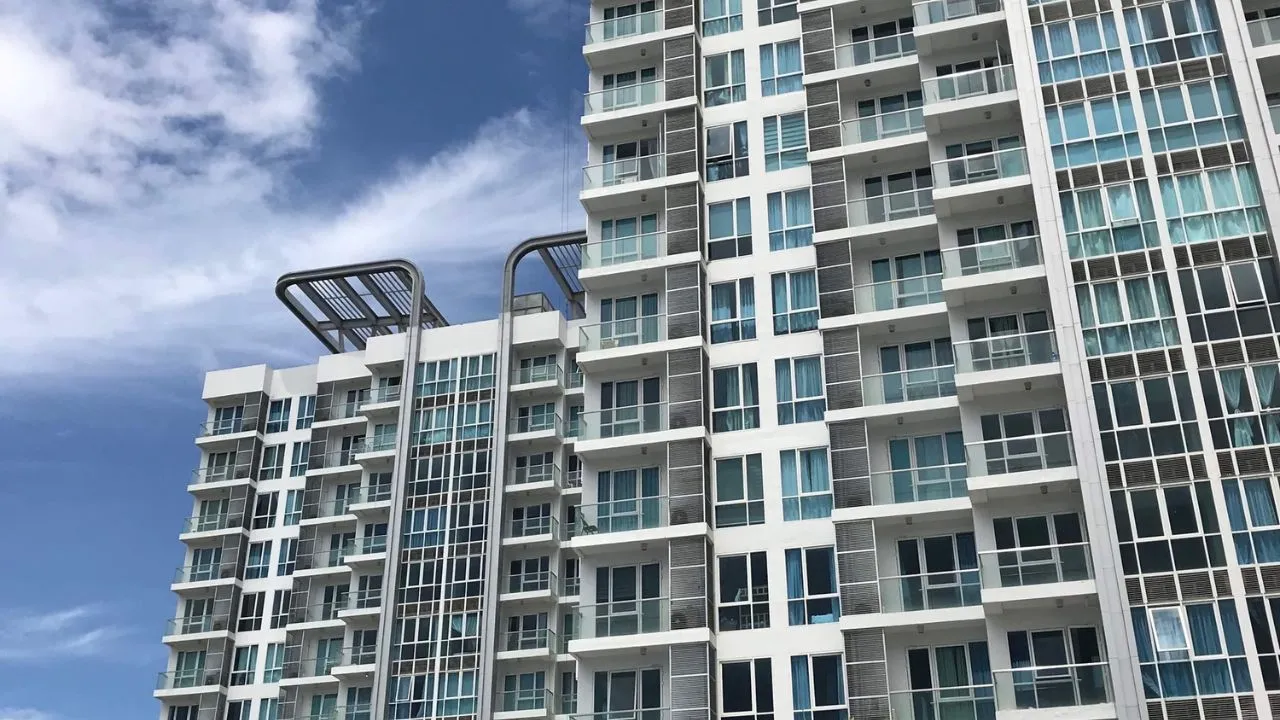
The one form of real property that foreigners can own outright is a condominium unit under the Condominium Act (Republic Act No. 4726). A condominium unit represents a share in a condominium corporation that holds title to the land and common areas, rather than direct ownership of the land itself. This is what makes foreign ownership constitutionally workable.
The catch is a building-wide cap: foreign nationals may own no more than 40% of the units in any single condominium project. Once a project hits that threshold, the remaining units can only be sold to Filipino buyers, and registration will refuse title transfer to a foreign buyer beyond the cap.
For a buyer looking at a specific unit, it is worth confirming with the developer or the condominium corporation how close the project already is to that 40% ceiling.
If you need assistance reviewing the legal considerations surrounding property ownership in the Philippines, ILA Global Consulting can guide you through the applicable requirements and help you navigate the legal process.
Can Foreigners Own a House Without Owning the Land?
Philippine law separates land ownership from ownership of what is built on it, which opens a second option: a foreigner can own a house, building, or other structure outright while leasing the underlying land from its Filipino owner.
This is common in practice for foreigners building a residence on land owned by a Filipino spouse, relative, or unrelated landowner under a formal lease. A properly documented lease agreement is essential. Without one, the improvements can fall into a legal gray area regarding ownership and what happens when the lease ends.
Long-term Leases: A Significant Recent Change
For decades, the main long-term leasing option for foreign investors was the Investors’ Lease Act of 1993 (Republic Act No. 7652), which allowed a lease term of up to 50 years, renewable once for another 25 years, for a total of 75 years. However, this required navigating a separate renewal approval partway through the lease.
That changed in September 2025, when President Marcos signed Republic Act No. 12252, which amends RA 7652 and replaces the old 50-plus-25 structure with a single, non-renewable lease term of up to 99 years. The new law removes the renewal-approval step entirely, giving qualifying foreign investors much longer certainty over their tenure in a single transaction.
The key word is “qualifying.” RA 12252 is not open to any foreign lessee. It applies to foreign nationals or entities whose investment has been approved and registered under the Foreign Investments Act or with a recognized investment promotion agency such as the Board of Investments or PEZA. The land leased must also be reasonably required for that registered investment.
Certain sectors carry their own minimum investment thresholds. Tourism projects, for example, are commonly cited as requiring at least USD 5 million, with a requirement that a substantial share of that investment, around 70%, be infused within the first three years of the lease.
Foreigners leasing land for purely personal reasons, a residence, for instance, with no registered investment behind it, remain under the older, more limited general leasing rules for private land. These have historically been capped at 25 years, renewable for another 25 years. This is because RA 12252’s extended terms are specifically an investment incentive rather than a general leasing right for any foreign national.
Own Land Through a Philippine Corporation
A foreign national can hold land indirectly by owning shares in a Philippine corporation that itself owns the land, but only if that corporation is at least 60% Filipino-owned, meaning foreign shareholding is capped at 40%.
This is the same 60/40 structure used across other nationality-restricted sectors, and it carries the same warning: the Anti-Dummy Law criminalizes arrangements where Filipino shareholders hold shares nominally while a foreign investor actually controls the company and its land.
A genuine 60/40 corporation, with Filipino co-owners who have a genuine ownership interest and a real say in the company, is a legitimate structure. A paper arrangement designed to disguise 100% foreign control is not. Both the foreign investor and the Filipino “dummy” can face liability for such an arrangement.
| Durée | Définition |
|---|---|
| Anti-Dummy Law | A Philippine law that prohibits the use of Filipino citizens or entities as nominal holders of ownership or positions reserved for Filipinos when a foreign national actually exercises control or enjoys the benefits of the business. |
| Nominal Shareholder | A person recorded as a shareholder in name but who does not have genuine ownership interest or meaningful control over the shares they formally hold. |
Does Marriage to a Filipino Citizen Allow a Foreigner to Own Land?

Marrying a Filipino citizen does not create a path to land ownership for the foreign spouse. Land acquired during the marriage can only be titled in the Filipino spouse’s name, and Philippine courts have consistently held that the foreign spouse has no ownership interest in that land, even where the couple treats it as shared property in practice or the foreign spouse funded the purchase.
This has real consequences in the event of separation, annulment, or the Filipino spouse’s death without a will naming the foreign spouse as a beneficiary through some other legal mechanism. Couples in this situation are therefore generally advised to think through the property arrangement and put it in writing well before any money changes hands.
What Are the Exceptions for Inheritance and Former Filipino Citizens?
Two exceptions to the general rule exist, and both are narrower than many assume.
Hereditary Succession
The Constitution allows land to pass to a foreign national through hereditary succession. In practice, this means a foreigner who qualifies as a legal heir under intestate succession, that is, inheriting because there was no will, can end up owning land that way.
This generally does not extend to being named as a beneficiary in someone’s will if that person was not already an heir by law. The exception is therefore considerably narrower than the general statement that “foreigners can inherit land.”
Former Natural-Born Filipino Citizens
Foreigners who were born Filipino and later acquired another citizenship retain limited land rights under Batas Pambansa 185 and Republic Act No. 8179. These include up to 1,000 square meters of urban land or one hectare of rural land for residential purposes, or larger areas for business use.
Former Filipinos who formally reacquire Philippine citizenship under the Citizenship Retention and Re-acquisition Act of 2003 (Republic Act No. 9225) go further still. As full Filipino citizens again, they regain unrestricted land ownership rights, without the area limits that apply to those who only hold the more limited former-citizen allowance.
| Durée | Définition |
|---|---|
| Hereditary Succession | The transfer of property rights from a deceased person to their legal heirs under applicable succession laws. |
| Intestate Succession | The legal process for distributing a deceased person’s estate when the person dies without a valid will, with property passing to heirs determined by law. |
| Natural-Born Filipino Citizen | A person who is a Filipino citizen from birth without having to perform any act to acquire or perfect Philippine citizenship. |
What Should Foreign Buyers Know About Financing and Purchase Costs

Foreign buyers should also plan around financing early, since it does not work quite the way it does back home. Most Philippine banks are cautious about lending to non-resident foreigners, and mortgage financing for foreigners, where it exists at all, is generally limited to a smaller pool of banks. It often requires a Filipino co-borrower or resident status and comes with stricter terms than those available to Filipino citizens.
In practice, a large share of foreign condominium purchases in the Philippines are paid in cash or financed through the buyer’s bank in their home country rather than through a local Philippine mortgage.
In addition to the purchase price, buyers should budget for standard transaction costs, including documentary stamp tax, transfer tax charged by the local government unit, and registration fees at the Registry of Deeds. Depending on how the sale is structured, capital gains tax or value-added tax may also apply. By custom, these are typically for the seller’s account, but they are sometimes negotiated into the buyer’s side of the deal.
These costs, together with real estate broker’s fees where one is involved, commonly add several percentage points to the headline purchase price. Factor them into the budget from the outset rather than treating them as an afterthought.
What Should Foreign Buyers Check Before Purchasing Property?
Whichever route applies, a few due-diligence habits matter regardless of nationality. These include verifying the title at the Registry of Deeds, confirming the seller’s or developer’s actual ownership and checking for existing liens or encumbrances, checking a condominium project’s foreign-ownership percentage before committing to a unit, and having any lease or corporate structure reviewed by Philippine counsel before signing.
Real estate scams and title disputes are not unique to foreign buyers. However, a foreign buyer navigating an unfamiliar legal system can be a more attractive target. The safeguards above are therefore just as important for protecting against ordinary bad-faith sellers as they are for staying within ownership rules.
ILA Global Consulting assists foreign investors with property due diligence, ownership structuring, and the legal documentation required to establish a compliant property investment in the Philippines.
Contact ILA Global Consulting Philippines for professional guidance on the legal structure and requirements for your investment.
Questions fréquemment posées
Generally, a foreigner cannot directly own land in the Philippines. However, limited legal routes may apply, including hereditary succession, certain rights available to former natural-born Filipino citizens, and ownership through a Philippine corporation that meets the constitutional 60% Filipino ownership requirement. Long-term leases may also provide qualifying foreign investors with extended rights to use land without owning it.
No. Marriage to a Filipino citizen does not give the foreign spouse the right to own land. Land acquired during the marriage must be titled in the Filipino spouse’s name, and the foreign spouse does not automatically acquire an ownership interest in the property.
A former natural-born Filipino who acquired foreign citizenship may retain limited land rights under Philippine law. However, these rights are subject to specific area and purpose restrictions. Those who formally reacquire Philippine citizenship under Republic Act No. 9225 regain the same unrestricted land ownership rights as other Filipino citizens.
The primary restriction is constitutional. Private land may generally be owned only by Filipino citizens and corporations or associations that are at least 60% Filipino-owned. Foreign buyers must also comply with restrictions that apply to specific property structures, such as the 40% foreign ownership cap for condominium projects.
Foreigners can legally acquire certain types of property, including condominium units, or use alternatives such as long-term leases and qualifying corporate structures. Before proceeding, buyers should verify ownership rights, applicable foreign ownership limits, title records, liens or encumbrances, and the transaction’s legal structure.